Europe, from the middle of it
Unpack once. Wake up in a different country. Walk off the ship into the old town instead of a container port an hour outside it.
Nothing like an ocean cruise, despite the name
A European river ship carries somewhere between 110 and 190 guests — roughly the population of a small hotel, and about one-twentieth of a modern ocean liner. It has three passenger decks, one dining room with a single unhurried seating, a sun deck, and a wheelhouse that folds flat to clear the bridges. The dimensions are not a style choice: the locks on the Rhine and Danube are a fixed size, so every ship on that corridor is built to within a metre or two of the same length.
What that produces is a very particular kind of trip. There is no casino, no water slide, no third formal night. There is also no tender queue, no sea day, and no motion — the river is flat, so seasickness simply does not arise. You dock in the centre of town, usually walking distance from the cathedral square, and you are often still tied up after dinner, which means an evening ashore is a real option rather than a scramble back to the ship.
The other thing people underestimate is the pace. A guided walk most mornings, an afternoon that is genuinely yours, and scenic stretches — the Middle Rhine gorge, the Wachau Valley, the Douro's terraced vineyards — that you watch go past from a deck chair. It suits travelers who want to see a great deal of Europe without repacking a suitcase eight times.
Which river is your trip?
The ships are broadly similar. The rivers are not — this is the choice that actually shapes the week.
The Rhine
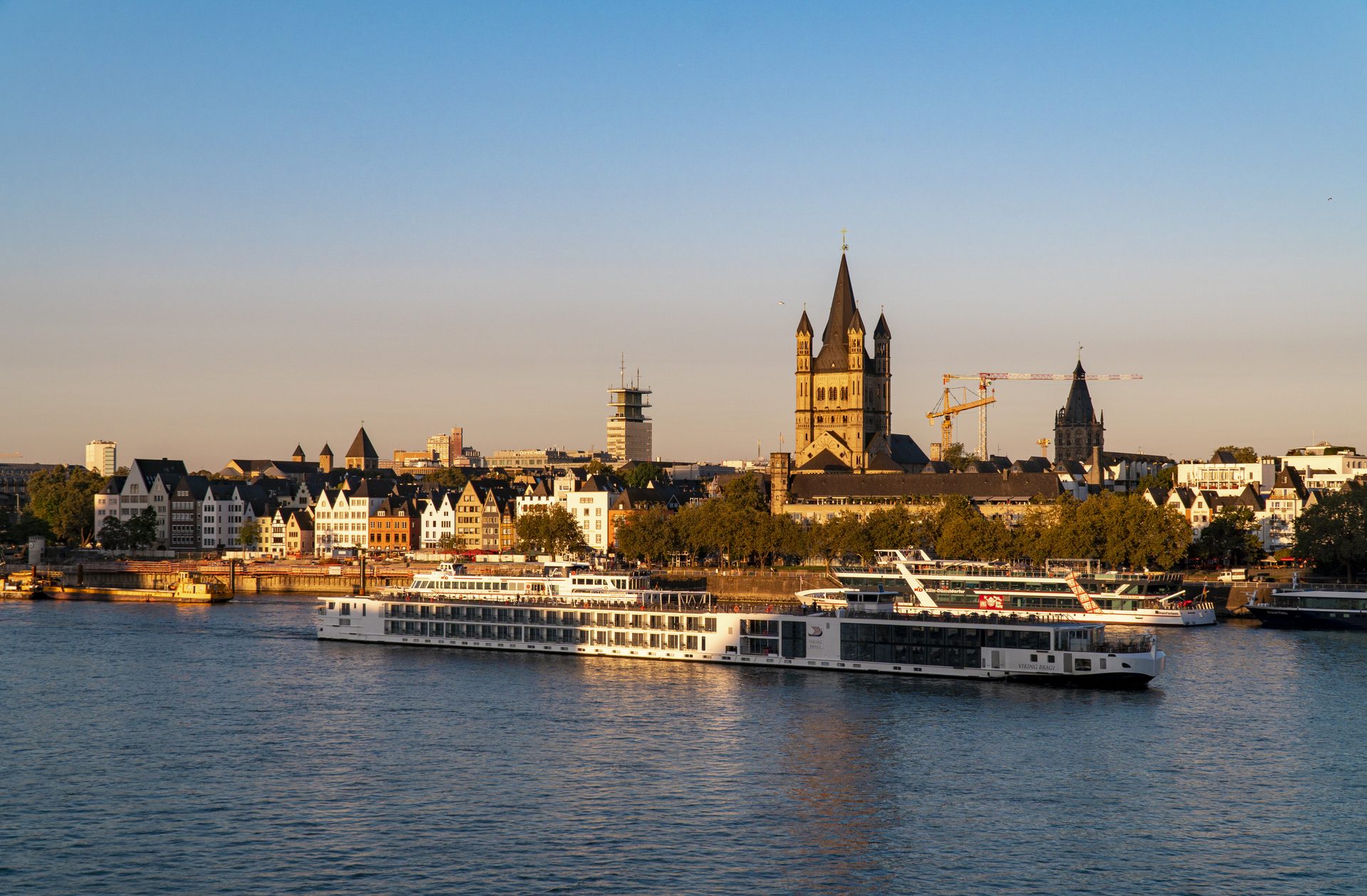
The one most people mean. Cologne's cathedral, the castle-lined Middle Rhine gorge between Rüdesheim and Koblenz, Heidelberg, Strasbourg and the Black Forest. Four countries in a week, and the best first river cruise for almost everyone.
The Danube
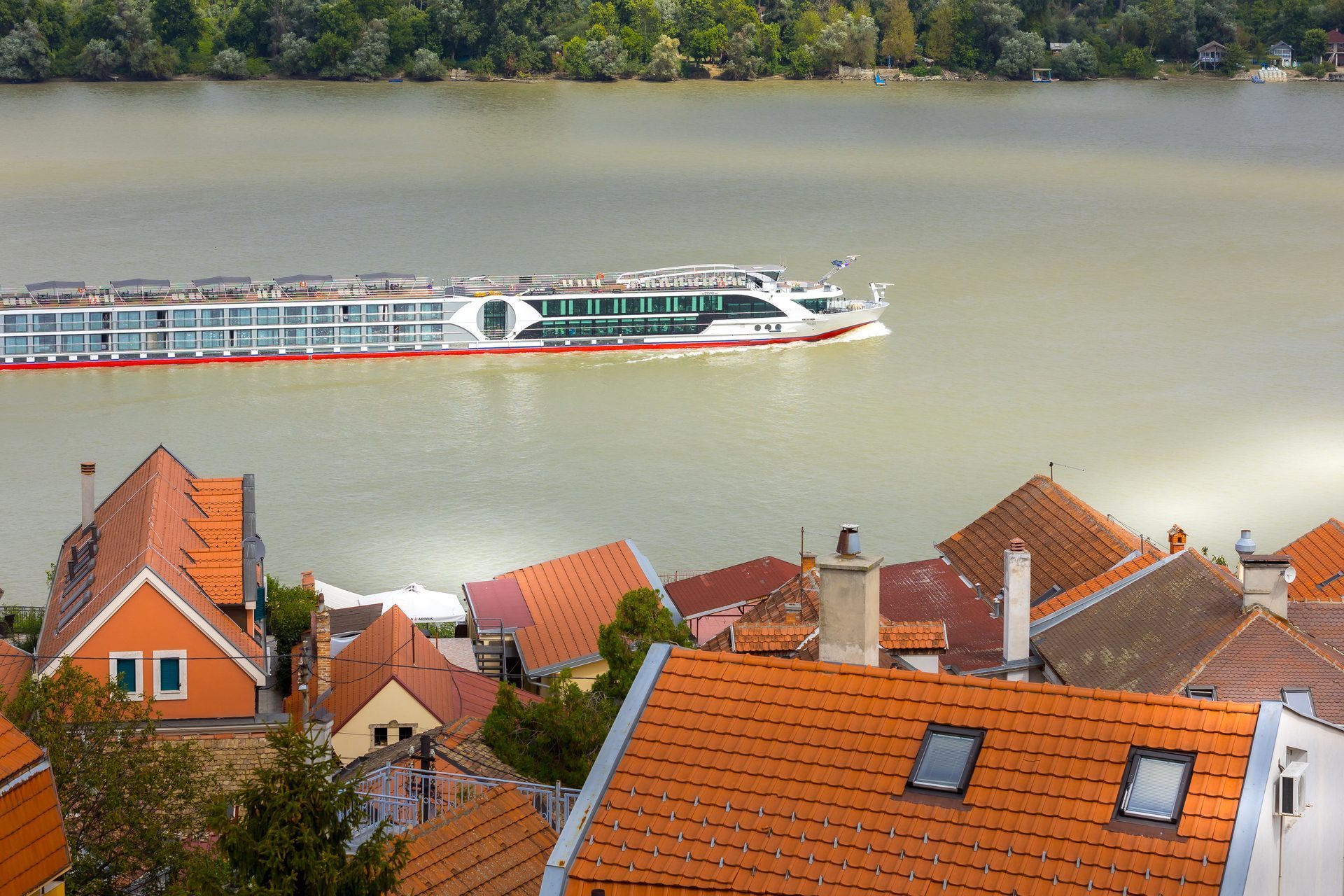
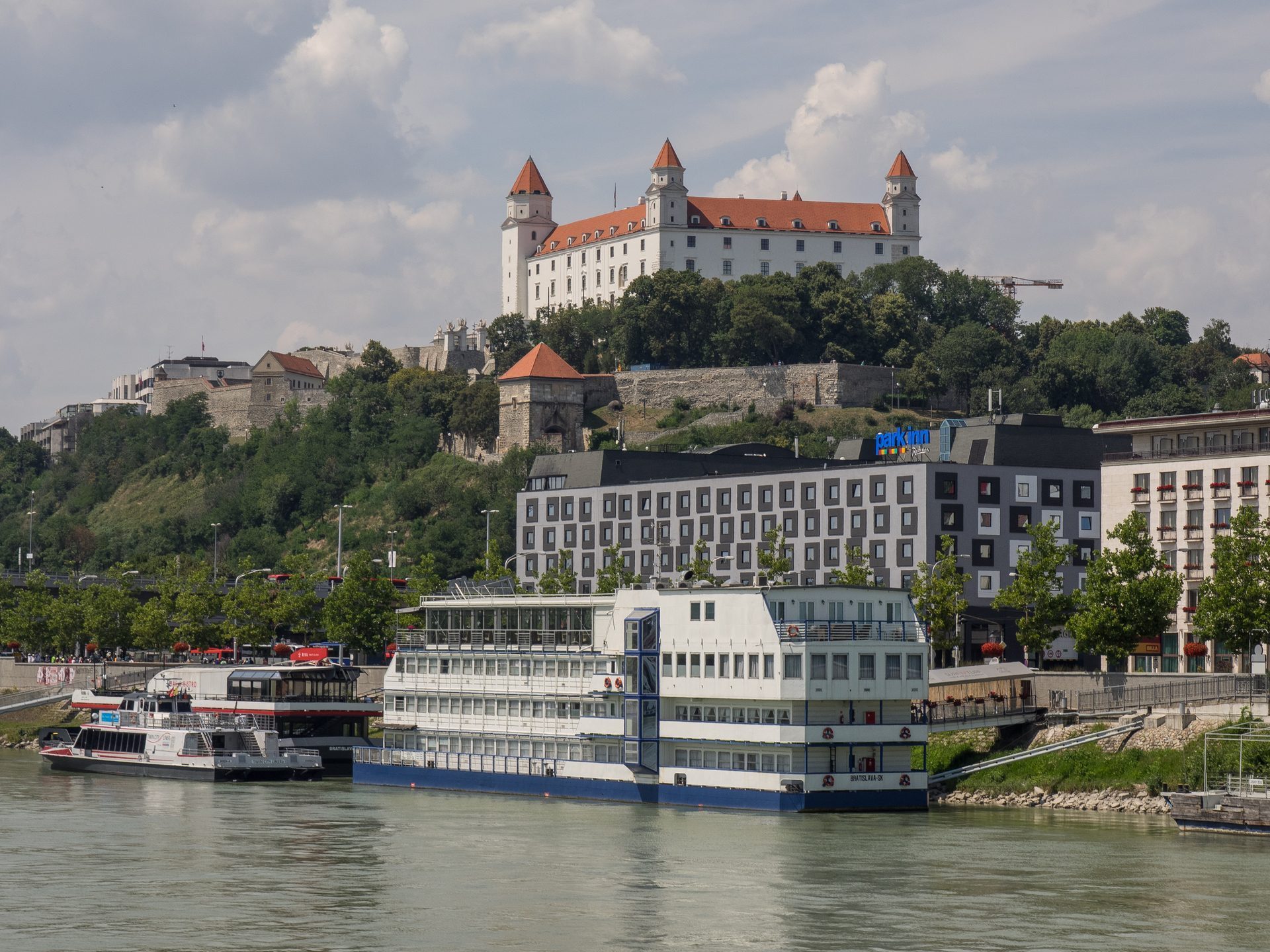
Vienna, Bratislava, Melk Abbey above the Wachau Valley, and an arrival into Budapest that is worth staying up for. Longer itineraries carry on east through Croatia, Serbia and Romania to the Black Sea.
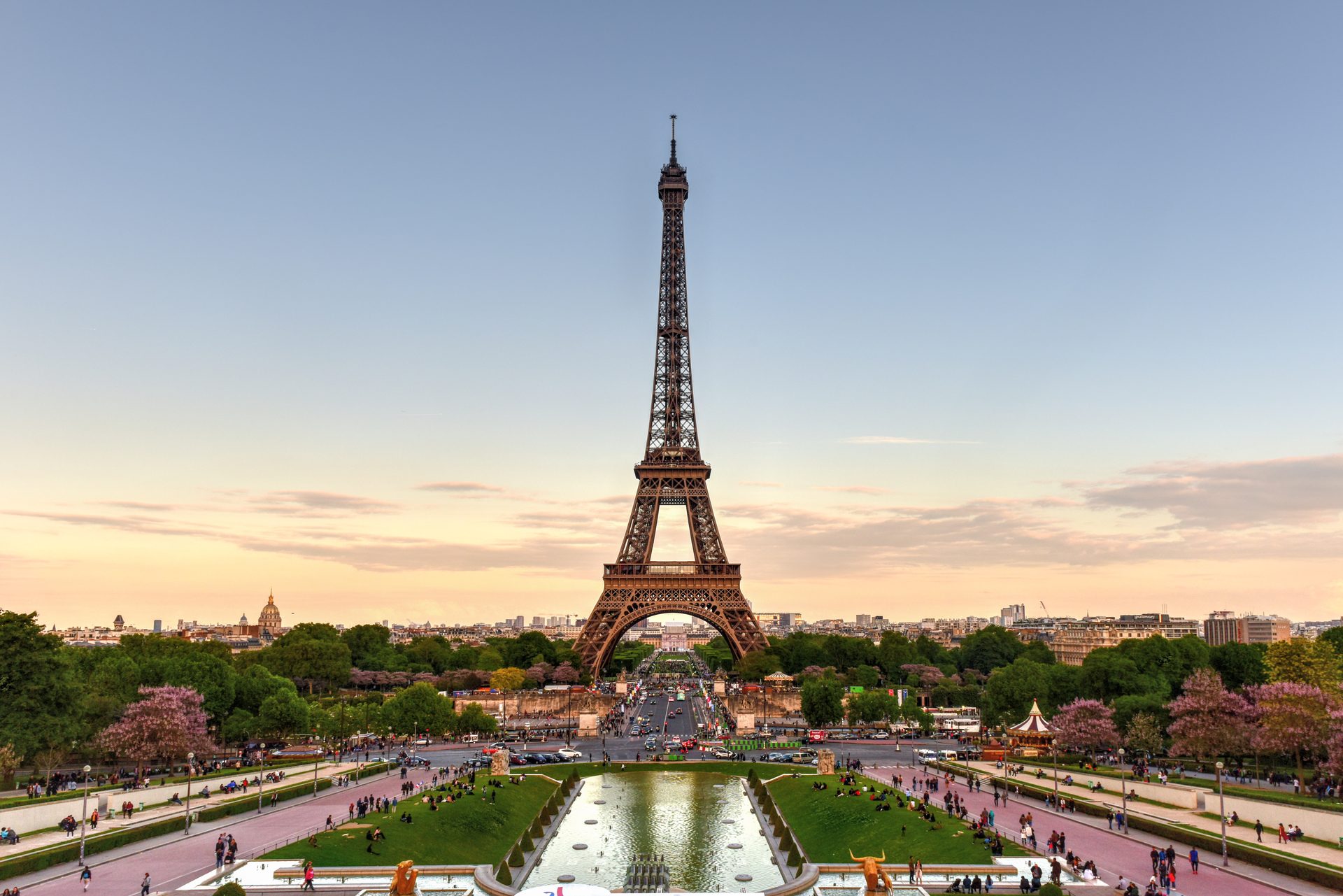
The Seine
Out of Paris into Normandy — Rouen, Honfleur, Monet's garden at Giverny, and the D-Day beaches. The shortest flight of the six and the easiest to bolt a few Paris nights onto either end.
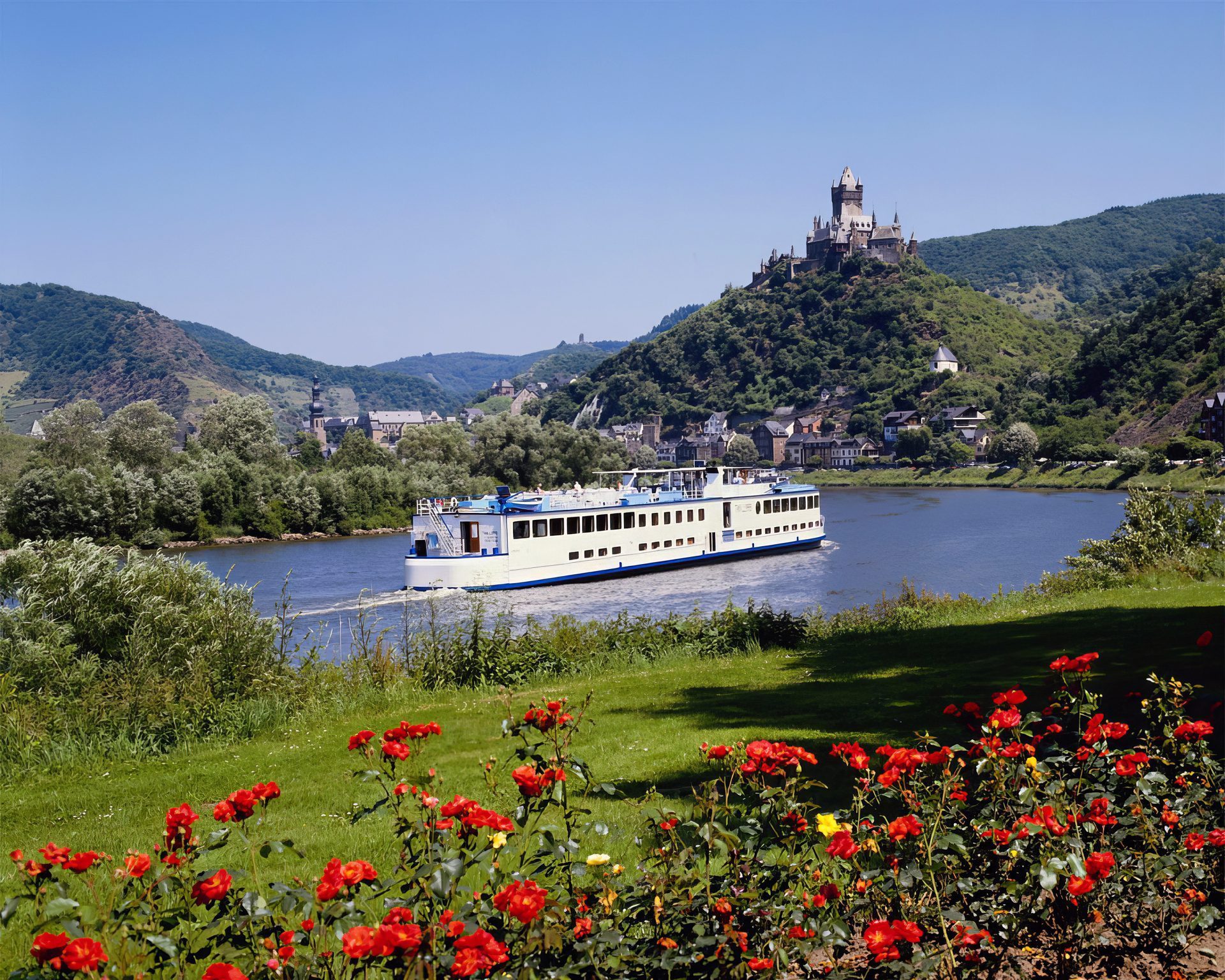
The Douro
Portugal's port-wine river, and the most scenically dramatic of the lot — terraced vineyards stacked up both banks, quinta visits, and far fewer ships than the Rhine or Danube. Book it early; capacity is genuinely limited.
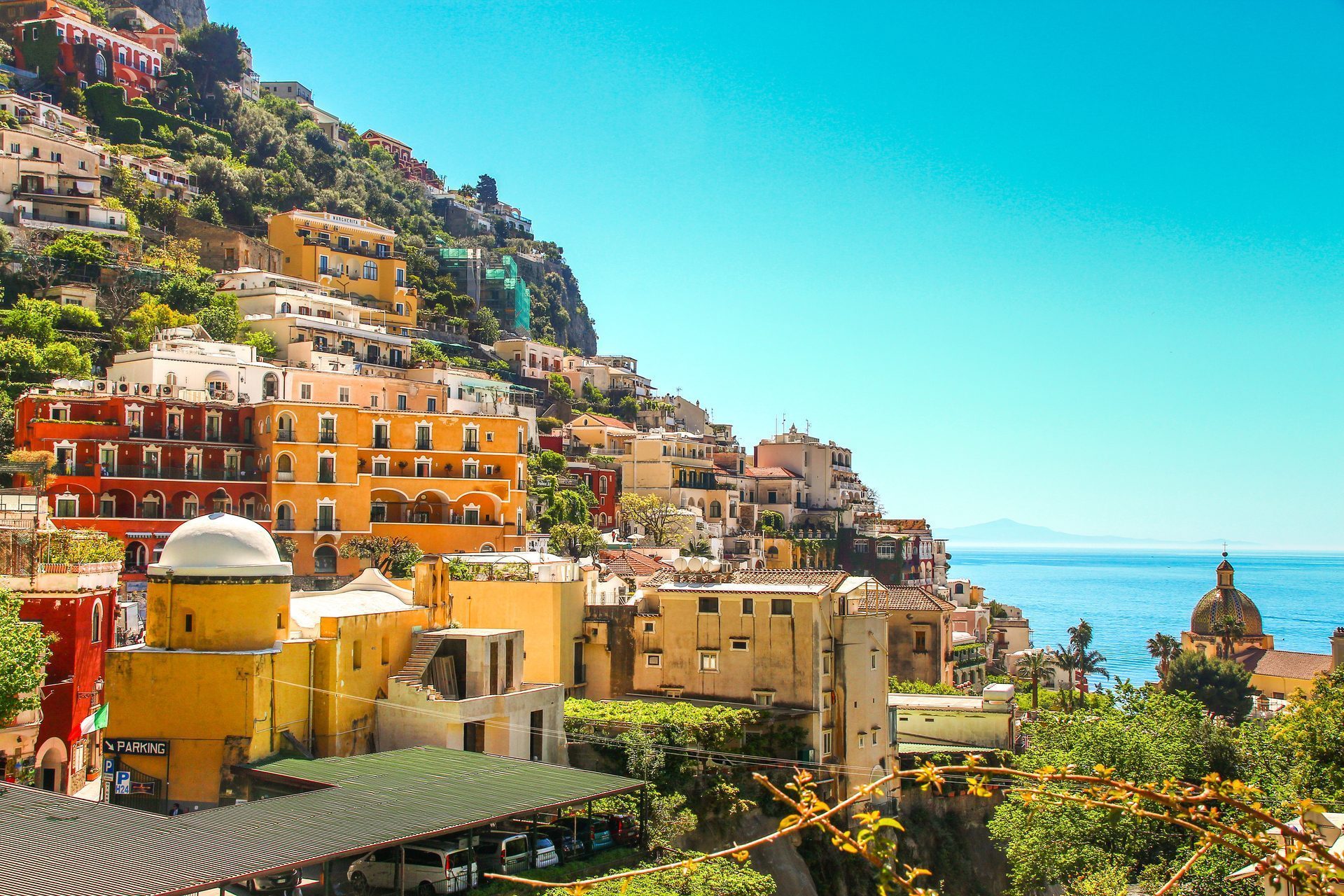
The Rhône & Saône
Provence and Burgundy — Avignon, Arles, Beaujolais and Lyon, which is the serious eating city of France. The strongest choice of the six if food and wine are the actual point of the trip.
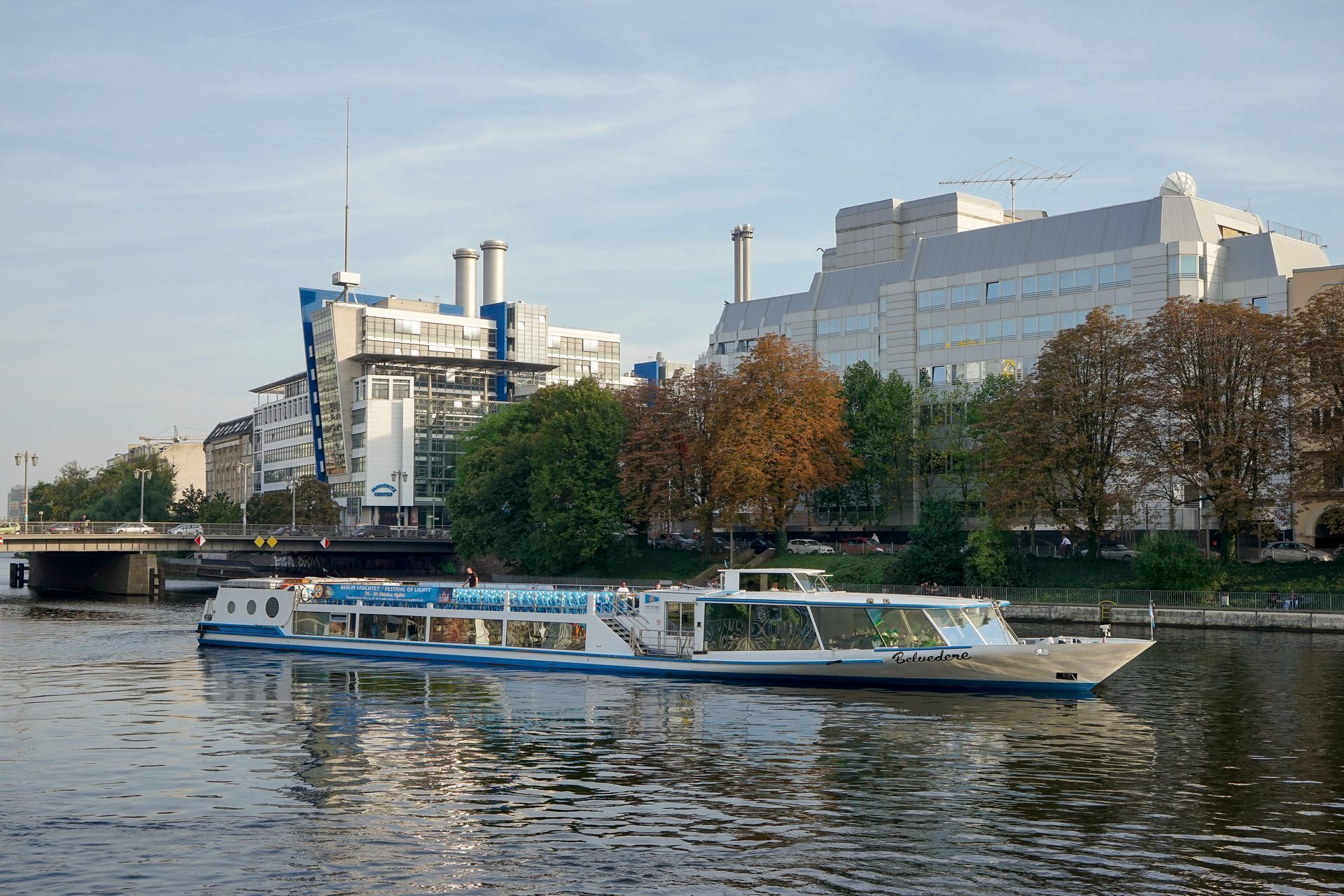
The Elbe
Dresden, Meissen, Wittenberg and the Saxon countryside, between two of Europe's great capitals. A shallower river than the rest, so it runs smaller purpose-built ships and is the most weather-dependent — we will be straight with you about that.
What is actually included
River fares look high next to an ocean cruise until you work out what you are no longer paying for. The lines differ, so these are the questions we check on the specific sailing.
Almost always in
- All meals on board, with one unhurried seating
- Regional wine and beer with lunch and dinner
- A guided excursion in most ports, with headsets
- Wi-fi, bicycles, and the port charges
Ask before you book
- Airfare and the transfer from the airport
- Gratuities — included by some lines, not others
- Drinks outside meal times, and premium spirits
- Small-group and "signature" optional excursions
What the rhythm actually feels like
Not every day looks like this — but most do, and it is the shape people either love immediately or know straight away is not for them.
You are already there
The ship sailed overnight or in the small hours and is tied up in the middle of a town you have not seen yet. Breakfast is a long buffet plus a cooked menu, and nobody hurries you off.
A guided walk, at your pace
Two or three hours with a local guide and a headset, usually split into a gentle group and a brisker one. Or skip it entirely and go your own way — the ship is a five-minute walk back.
Lunch as the lines come in
The ship casts off while you eat, and the countryside starts moving past the window. This is when the scenic stretches happen — the Rhine gorge, the Wachau, the Douro terraces.
The port talk
Fifteen minutes in the lounge on tomorrow's town, what is worth your time, and what the weather is doing. Then dinner, one seating, no assigned table, regional menu that follows the route.
Ashore again, if you like
On many nights the ship stays alongside. A local musician or a glass on the sun deck if you would rather not move — the bridges going by after dark are their own entertainment.
Four seasons, four different trips
Tulip time, late March to April. Round-trip Amsterdam for Keukenhof and the bulb fields. A short, specific season that sells out a year ahead.
High season, May to September. Long evenings, every terrace open, and the fullest excursion programme. July and August are hottest and busiest; May, June and September are the sweet spot.
Autumn, October. Harvest on the Douro and the Rhône, fewer ships, lower fares, and the light at its best for photographs.
Christmas markets, late November to December. Nuremberg, Regensburg, Passau, Vienna — the old squares full of wooden stalls and mulled wine, and the ship as a warm hotel that moves. The fastest-growing river product, and the one we book earliest.
Where the ships tie up
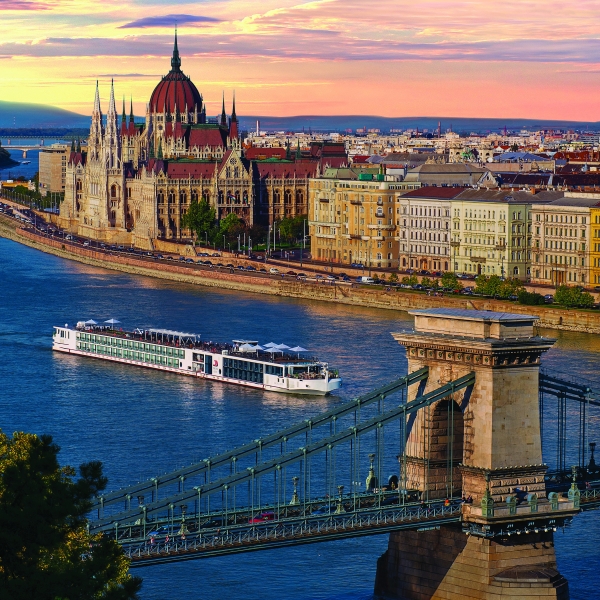
Budapest photo credit: Viking River Cruises.
Deck, cabin, and the things nobody puts in the brochure
Which deck
- Lower deckFixed windows set high in the cabin, and the lowest fare on the ship. The room is the same size; the view is not. Genuinely fine if you plan to be off the ship all day.
- Middle and upperFrench balconies — floor-to-ceiling glass that slides open — or a step-out balcony. Worth the difference on the scenic rivers, less so on the Seine.
- SuitesForward on most ships, with the best light and the most space. A handful per vessel, gone first.
Where along the ship
- Mid-ship is quietestThe engines are aft, and on a 135-metre hull you can hear them in the last few cabins at night.
- Forward can knockIn locks and when mooring alongside another ship. Rarely a problem, occasionally a 6am one.
- Rafting upIn busy ports ships tie two or three abreast, and your window may look at another hull for a night. It happens to everyone; it is not a defect.
Worth knowing
- Water levelsDrought or flood can force a ship swap or a coach transfer between vessels. Uncommon, not rare, and worse in high summer. Every line handles it differently — we will tell you how yours does.
- Lifts stop shortThe elevator usually does not reach the sun deck, and gangways can be steep. Say so early if stairs are difficult and we will match the ship to that.
- Add nights either endA jet-lag day in Amsterdam or Budapest before you board changes the whole first half of the trip.
Tell us the season and who's travelling
We book the major river lines, including Uniworld and Viking, and we know which decks and cabins are worth the difference on each ship. We'll come back with two or three sailings and current pricing.